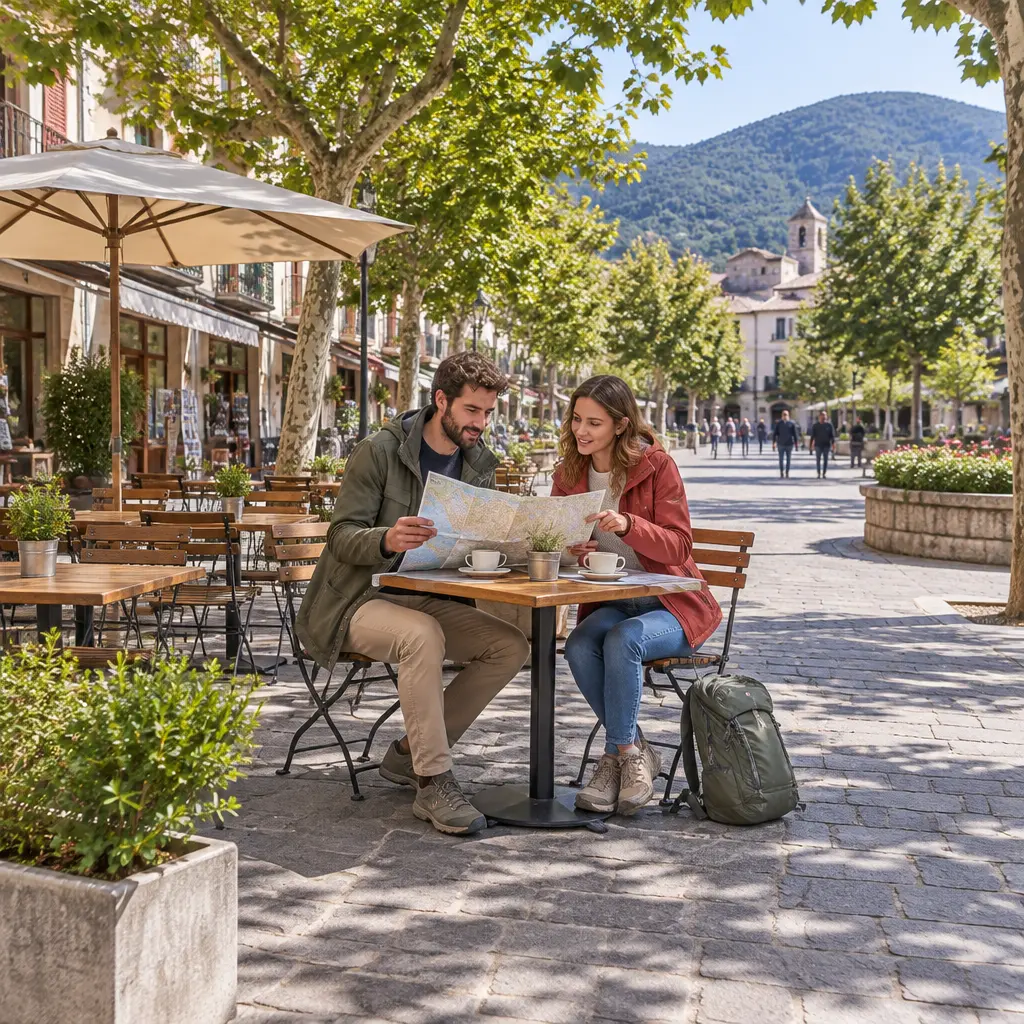
Slow travel for couples is a relationship-centered way of exploring that favors fewer destinations, longer stays, and meaningful participation in local life over a packed itinerary. Rather than racing between attractions, couples can use unhurried days to share decisions, build small rituals, and experience a place more deeply. This approach is especially relevant as tourism grows: UN Tourism reported approximately 1.4 billion international tourist arrivals in 2024, about 99% of the 2019 level. A thoughtful getaway can apply slow-travel principles through destination choice, lodging, transport, daily pacing, and responsible spending—without requiring a long or expensive trip.
Slow Travel for Couples: Meaning and Defining Attributes
Slow travel is a style of tourism that prioritizes depth, connection, and a measured pace rather than maximizing the number of places visited. There is no single universal definition, but the concept is commonly associated with longer stays, fewer transfers, local experiences, and reduced pressure to follow a rigid schedule. The Center for Slow Tourism describes the approach in terms of mindful, place-based travel that gives visitors time to engage with destinations.
For couples, the defining attribute is shared attention: partners make room for both the destination and each other. Its practical forms, or hyponyms, include a one-town retreat, a rail-based regional journey, a countryside cottage stay, a culinary immersion, and a multi-day walking or cycling holiday. Each can be slow travel when the itinerary values sustained experience over rapid movement.
Fewer destinations, longer stays
A longer stay means choosing one primary base—or a small number of nearby bases—instead of changing accommodation every night. This reduces packing and transit time and gives couples opportunities to return to a favorite café, market, beach, or walking route. A useful test is whether the trip includes enough unplanned time to revisit a place rather than merely check it off.
Presence over packed schedules
A presence-centered itinerary leaves space for meals, rest, conversation, and spontaneous discoveries. The American Psychological Association’s research summaries on stress describe how prolonged stress can affect physical and emotional well-being; a holiday cannot replace treatment or solve every source of stress, but a less hurried schedule may avoid adding unnecessary logistical pressure. Couples can plan one anchor activity a day and treat other ideas as options, not obligations.
Local connection and responsible choices
Place-based travel directs attention toward local food, independent businesses, regional customs, and the needs of residents. The Global Sustainable Tourism Council’s destination criteria emphasize sustainable management, socioeconomic benefits for local communities, and the conservation of cultural and natural heritage. Choosing locally owned accommodation or dining with neighborhood businesses can help put that principle into practice, though responsible travel also requires respecting local rules, privacy, and community capacity.
A Couple’s Slow-Travel Itinerary Builds Connection
Once the idea is clear, the next step is shaping a trip around how both partners actually want to spend their time. A slow itinerary is not simply an empty calendar: it balances shared priorities with breathing room and makes decisions before small disagreements become stressful.
Agree on the purpose before choosing activities
A trip purpose is the shared outcome the couple hopes to experience, such as rest, outdoor adventure, food discovery, cultural learning, or celebration. Each partner can independently name a priority and a limit—for example, one must-do activity and one thing they do not want the trip to become. Compare answers before booking so that a “relaxing escape” does not quietly turn into a strenuous sightseeing marathon for one person.
Use a light daily rhythm
A light daily rhythm is a repeatable structure that provides direction without filling every hour. Couples might plan a slow breakfast, one main outing, an unhurried meal, and an open evening. Build in realistic travel and rest time: the U.S. Centers for Disease Control and Prevention advises travelers to plan for health needs and time-zone adjustment, while its travel guidance also recommends researching destination-specific risks before departure.
Make room for different preferences
Preference-sharing means treating differences in energy, budget, and interests as planning information rather than a problem to win. One partner can take a solo museum visit or morning walk while the other rests, followed by a shared activity later. A short daily check-in—“What felt good today, and what would you change tomorrow?”—keeps the itinerary responsive without requiring constant negotiation.
Slow-Travel Destinations, Lodging, and Transportation
The itinerary becomes easier to sustain when the destination and logistics support lingering. A compact town, walkable neighborhood, or regional hub can make a slower pace practical, while a remote location may demand more advance planning for food, transport, and access to services.
Choose a destination that rewards staying put
A stay-put destination offers enough nearby variety for several days without requiring constant transfers. Look for walkable streets, public transport, local markets, accessible nature, and activities that suit both partners. Tourism boards can be useful for orientation, but check current opening schedules, seasonal conditions, accessibility details, and local visitor guidance before committing.
Select lodging for daily life, not just photos
Slow-travel lodging supports the ordinary comforts that make a longer stay enjoyable: a quiet sleeping space, convenient meals, laundry access, and a location that reduces unnecessary journeys. A small guesthouse, apartment, inn, or locally run hotel may suit the trip better than a property chosen only for its views. Confirm total fees, cancellation terms, transport access, and whether the accommodation follows local regulations.
Reduce unnecessary transfers
A transfer is a journey between destinations or accommodations. Fewer transfers can mean less time spent navigating, waiting, and repacking. Where practical, compare rail, bus, ferry, walking, and cycling options with driving or flying, while considering the full journey and accessibility needs. The International Energy Agency identifies transport as a major source of global energy-related carbon dioxide emissions; choosing lower-emission options where feasible can help reduce a trip’s footprint, but actual impacts depend on distance, occupancy, vehicle type, and route.
Budgeting and Practical Planning for a Slow Getaway
A slower trip may reduce repeated transport and activity costs, but a longer stay can increase accommodation and meal expenses. The best comparison is the total cost of the experience—not a nightly rate alone. Plan for essentials first, then decide which comforts and activities are worth paying for.
Compare the full-trip cost
A full-trip budget includes transport to and within the destination, lodging, food, activities, insurance, fees, and a contingency reserve. Compare a longer stay with multiple short stays by adding all transfers and accommodation changes, not merely counting hotel nights. The U.S. Bureau of Labor Statistics’ Consumer Expenditure Surveys track household spending categories, including travel-related expenditures, and illustrate why budgets should be tailored to a household’s own spending patterns rather than assumed averages.
Travel in shoulder season when it fits
Shoulder season refers to periods between a destination’s busiest and quietest travel seasons. Depending on the place, it can offer a calmer atmosphere and different prices, but weather, transport frequency, and opening hours may be less predictable. Check historical climate information and current operating schedules, and avoid assuming that “off-season” automatically means lower cost or better conditions.
Protect the trip with practical safeguards
Practical safeguards include checking entry requirements, reviewing travel insurance, carrying essential medication, sharing an itinerary with a trusted contact, and keeping booking details accessible offline. The CDC’s Travelers’ Health resources recommend consulting destination-specific health information and considering a travel health professional before departure, especially for international trips or travelers with particular medical needs.
A Real-World Model: One Base, Many Small Discoveries
Consider a couple spending five nights in a walkable coastal town. Instead of touring several cities, they settle into one locally run inn, buy breakfast ingredients from a neighborhood market, and plan a single boat excursion after checking weather and safety guidance. The remaining days include a coastal walk, an independent restaurant, a free afternoon, and time to revisit a place they enjoyed. This is an illustrative model rather than a claim about a particular destination: its value lies in the pattern—one base, local spending, flexible pacing, and shared choices.
A simple visual planning tool can make the balance visible: create a weekly calendar with rows for morning, afternoon, and evening, then mark only fixed commitments in one color and optional ideas in another. If every space is filled with fixed plans, the getaway may be slow in name only. Leave several blocks open for rest, weather changes, or discoveries recommended by local residents.
Conclusion: Make Time the Defining Luxury
Slow travel for couples combines fewer destinations, longer stays, a flexible itinerary, thoughtful transport, and meaningful local engagement. Its core benefit is not a guarantee of relationship improvement or a lower-cost holiday; it is a way to design travel around attention, shared preferences, and a more considered connection to place. Start by choosing one destination that supports several days of exploration, agree on a realistic daily rhythm, and leave room for the unexpected. For further preparation, consult destination-specific visitor guidance, the CDC’s Travelers’ Health resources, and the Global Sustainable Tourism Council’s sustainability criteria before booking.
Sources: UN Tourism, World Tourism Barometer, January 2025, https://www.unwto.org/news/international-tourist-arrivals-reach-99-of-pre-pandemic-levels-in-2024; Center for Slow Tourism, What Is Slow Tourism?, https://slowtourism.org/; Global Sustainable Tourism Council, GSTC Destination Criteria, https://www.gstcouncil.org/gstc-criteria/gstc-destination-criteria/; American Psychological Association, Stress Effects on the Body, https://www.apa.org/topics/stress/body; U.S. Centers for Disease Control and Prevention, Travelers’ Health, https://wwwnc.cdc.gov/travel; International Energy Agency, Transport, https://www.iea.org/energy-system/transport; U.S. Bureau of Labor Statistics, Consumer Expenditure Surveys, https://www.bls.gov/cex/.