Glamping tents and treehouse stays are two forms of upscale outdoor lodging, but they offer different ways to experience late summer. Glamping tents place guests in canvas or other tent-like shelters, often with beds and private amenities, while treehouses provide elevated accommodation built among or around trees. In late summer, the choice can hinge on heat, insects, weather exposure, accessibility, privacy, and price—not just scenery. The U.S. National Park Service advises visitors to prepare for changing weather and seasonal hazards outdoors, while the U.S. Centers for Disease Control and Prevention recommends taking steps to prevent mosquito bites. These considerations make it useful to compare the stay itself, the site’s conditions, and the practical details before booking.
Late-Summer Comfort: Glamping Tents Compared with Treehouse Stays
There is no universal late-summer winner: a well-ventilated tent in a shaded, breezy site may feel more comfortable than a poorly ventilated treehouse, while a treehouse with screened windows and cooling may be more pleasant than a tent during a hot, still night. Both categories vary widely. “Glamping” describes a more comfortable or amenity-rich form of camping rather than a standardized lodging type, and “treehouse” can refer to anything from a simple elevated cabin to a fully serviced architectural retreat. Compare the property’s actual features, local forecast, and cancellation terms rather than relying on the label.
Glamping Tent Comfort and Late-Summer Conditions
A glamping tent is a tent-based guest accommodation equipped with comfort features that may include a proper bed, furnishings, electricity, a private bathroom, or climate-control equipment. The term has no single, universally enforced facility standard, so amenities differ by operator. For late-summer travel, the most relevant tent attributes are shade, airflow, insect protection, rain resistance, and the distance to shared or private facilities.
Canvas safari tents and bell tents
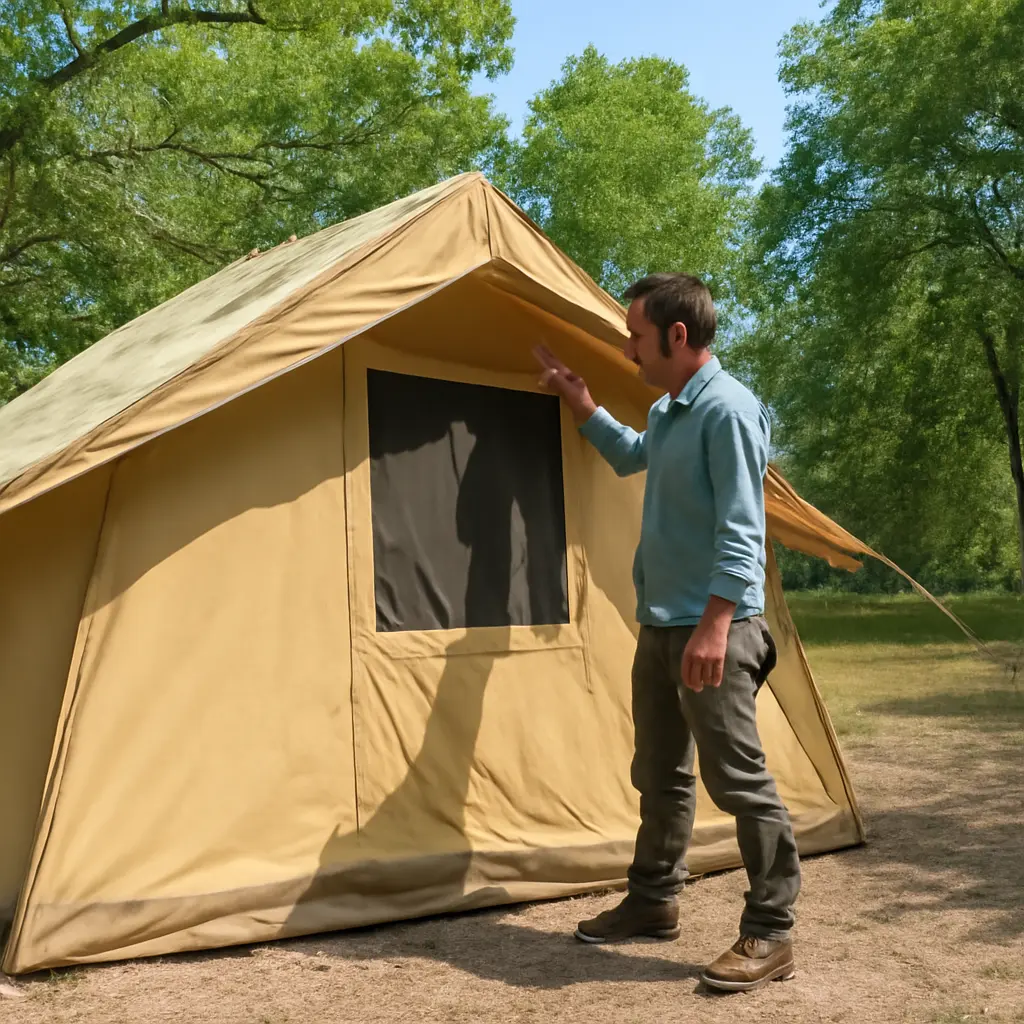
Safari tents and bell tents are roomy, fabric-sided shelters, often set on platforms and furnished for longer stays. Their larger interiors can feel less confined than conventional camping tents, but canvas does not by itself guarantee a cool room. Afternoon sun, low airflow, and warm overnight temperatures can make a tent uncomfortable. Ask whether the tent has cross-ventilation, ceiling or portable fans, a shaded porch, and screened openings; confirm whether electrical equipment is available and included.
Climate, insects, and weather protection
Tent comfort depends on exposure and construction as much as on the season. CDC guidance recommends using insect repellent and protective clothing to reduce mosquito bites; guests should also check whether the tent has intact screens and whether the site reports seasonal insect activity. Late summer may bring heat, thunderstorms, or wildfire smoke in some regions, but conditions are location-specific. Check the forecast and local advisories close to departure, and ask the operator how the tent handles heavy rain, strong wind, and evacuation or relocation if conditions become unsafe.
Bathroom access and practical convenience
Glamping tents range from fully en-suite units to simple shelters using shared bathhouses. That distinction can matter more during warm weather, when guests may shower more often or prefer quick access to water. Before booking, verify whether the bathroom is inside the tent, attached, or shared; whether water is potable; and how far the walk is at night. Also check for power, lighting, cooking rules, and any extra fees for linens or facility use.
Treehouse Stay Design and Late-Summer Conditions
A treehouse stay is guest lodging elevated in or around trees, or designed to create that experience. Some units are supported by trees; others use posts or nearby structures, so the name alone does not establish how a building is engineered. Treehouse stays may offer enclosed rooms, larger windows, balconies, and private bathrooms, but they also introduce stairs, elevated access, and potential exposure to wind, branches, and insects.
Cabin-style and elevated treehouses
Cabin-style treehouses typically provide more solid walls and conventional indoor amenities than tent stays, while retaining an elevated woodland setting. In late summer, an enclosed interior can be an advantage during rain or when insects are active, provided windows are screened and ventilation is effective. Ask whether the unit has air-conditioning or fans, and whether the cooling system can operate during local power interruptions. A balcony may add outdoor space but can receive direct sun and should not be assumed to be screened.
Access, safety, and mobility
Elevated lodging often requires stairs, ladders, narrow walkways, or uneven paths. This can make a treehouse unsuitable for guests with mobility limitations, small children who need close supervision, or anyone uncomfortable with heights. Ask for the number and steepness of steps, handrail details, lighting, and the route from parking to the unit. The U.S. Access Board’s accessibility standards address accessible routes and building features in covered settings, but individual vacation rentals may differ in their obligations and facilities; verify the specific accommodation rather than assuming it is accessible.
Privacy, weather, and the surrounding trees
Treehouse stays can feel secluded, but privacy depends on spacing, sightlines, and shared paths. Late-summer storms can also bring strong gusts or falling limbs, making the operator’s maintenance and severe-weather procedures important. Ask whether the property inspects trees and structures, what happens during a storm warning, and whether guests can reach a safe shelter quickly. The National Weather Service recommends paying attention to local forecasts and warnings; a scenic elevated setting should never take priority over safety instructions.
Choosing Between a Glamping Tent and a Treehouse
The best choice depends on what matters most to the traveler. A tent can suit guests seeking a closer-to-camping feel and a broad, open-air interior; a treehouse can suit those who prefer a more enclosed room and an elevated setting. Neither type guarantees better temperature control, lower insect exposure, or greater safety. Evaluate the property’s specifications and local conditions using the following comparison.
- For hot nights: Compare shade, airflow, fans, and air-conditioning—not the accommodation label.
- For rain or storms: Check the shelter’s construction, drainage, safe indoor or ground-level refuge, and cancellation policy.
- For insects: Confirm the condition of screens and use recommended bite-prevention measures.
- For accessibility: Ask about steps, slopes, paths, bathroom access, and parking distance.
- For privacy: Review site maps or photos and ask how close neighboring units and shared areas are.
- For value: Compare the total price, including cleaning charges, meals, utilities, parking, and required minimum stays.
A practical late-summer booking checklist
Before reserving either accommodation, contact the operator with specific questions. Request current photos, clarify which amenities are guaranteed, and confirm what happens if extreme heat, storms, smoke, or other local hazards affect the stay. Review the cancellation deadline and check official weather or public-safety updates shortly before traveling. If visiting a protected area, consult the relevant land-management agency for seasonal closures, fire restrictions, and trail conditions.
Conclusion: Match the Stay to the Site
Glamping tents and treehouse stays both offer distinctive outdoor lodging, but late-summer comfort depends on specific design and location details. Tent guests should focus on shade, ventilation, screens, and bathroom arrangements. Treehouse guests should assess cooling, stairs, accessibility, tree and storm safety, and privacy. Since neither category has a uniform standard, compare verified property features with the local forecast and your own needs. Before booking, ask the operator direct questions and consult official weather and safety guidance; that preparation is more reliable than choosing by accommodation name alone.
Sources: U.S. Centers for Disease Control and Prevention, Preventing Mosquito Bites, https://www.cdc.gov/mosquitoes/prevention/index.html; National Park Service, Outdoor Safety, https://www.nps.gov/subjects/healthandsafety/index.htm; U.S. Access Board, ADA Accessibility Standards, https://www.access-board.gov/ada/; National Weather Service, Weather Safety, https://www.weather.gov/safety/