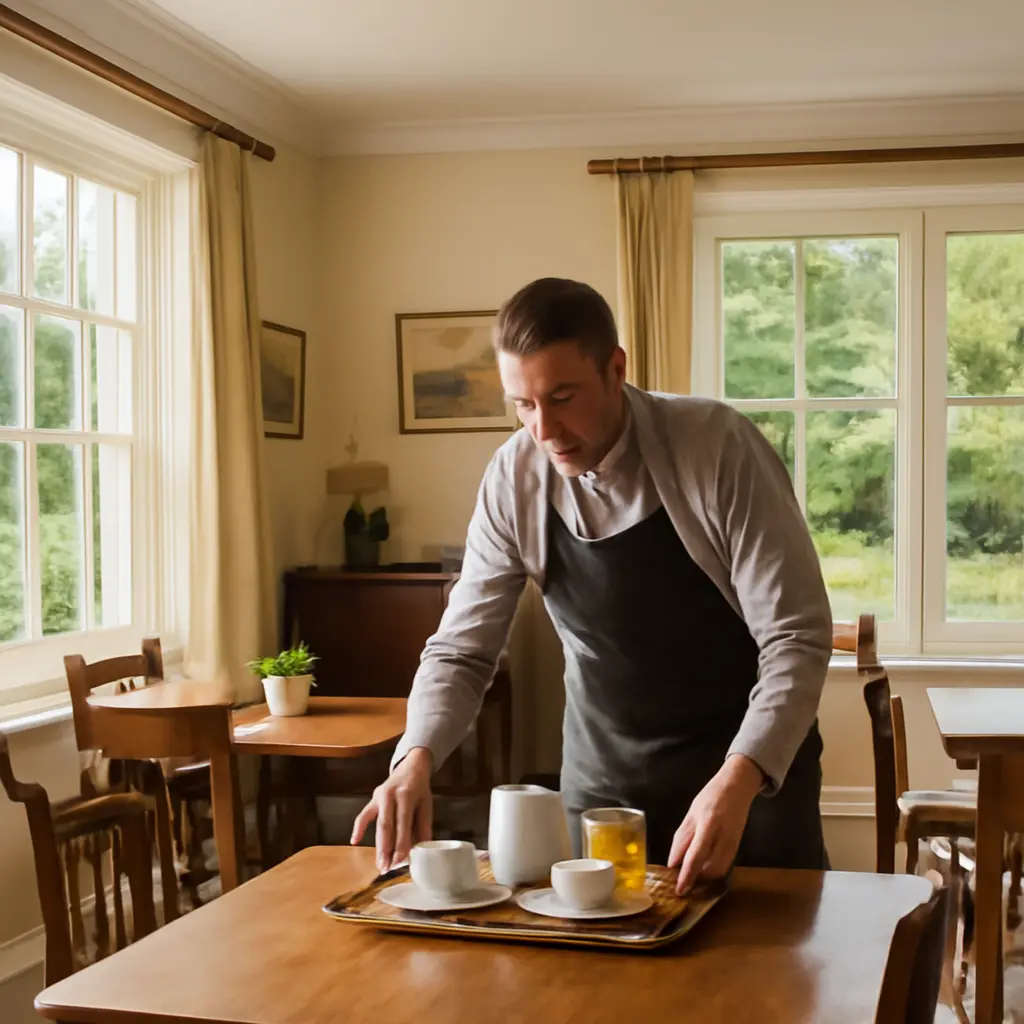
A bed and breakfast (B&B) is a small lodging business that combines overnight accommodation with breakfast, often in a distinctive property and with a more personal, host-led experience than a large hotel. The main difference is not simply size: B&Bs are commonly associated with breakfast and direct interaction with hosts, while hotels typically offer a broader range of standardized services, cabins emphasize a standalone nature-oriented stay, and vacation rentals provide an entire home or unit for guests to use independently. These categories overlap, so travelers should compare the specific property’s services, privacy, location, and rules. The scale of the lodging market makes the distinction useful: the American Hotel and Lodging Association reported that U.S. hotels generated $777.1 billion in business sales in 2023, while the U.S. Bureau of Labor Statistics’ Consumer Expenditure Survey tracks lodging costs as a distinct household spending category.
How B&B Guest Experience Differs From Other Lodging
A B&B’s defining attribute is the pairing of guest rooms with breakfast, usually within a smaller lodging operation. The details vary by country, local law, and property: breakfast may be included in the room rate, offered at set times, or available as an optional extra. The U.S. National Park Service describes bed-and-breakfast properties as small lodging establishments that provide overnight accommodation and breakfast, often in historic homes or other distinctive buildings. That description captures a common pattern, not a universal legal definition; local licensing and health requirements determine how an individual business operates.
The term “B&B” also covers several related forms, including traditional hosted inns, historic-house B&Bs, farm stays, and small guesthouses. A property’s label alone does not guarantee a particular service level. Guests should verify whether the hosts live on-site, whether breakfast is included, how many rooms share common areas, and whether bathrooms are private. Those practical features explain why B&Bs can feel different from hotels even when both sell individual guest rooms.
Breakfast and the hosted stay
Breakfast is the clearest distinction in the name and often in the daily routine. A B&B may serve a cooked meal, a continental spread, or a locally sourced breakfast in a shared dining room. A hotel may also provide breakfast, but it is generally one amenity among many and may be separately priced, delivered through a restaurant, or offered as a buffet. Travelers should check the booking terms rather than assume that “B&B” means a full hot breakfast or that a hotel rate includes food.
The host’s presence can shape the experience as much as the meal. Owners or innkeepers may explain the building’s history, recommend nearby businesses, or adjust the welcome to guests’ needs. This personal contact is a potential advantage for visitors seeking local knowledge, but it can mean less anonymity than at a large hotel. Allergy, dietary, and accessibility needs are best discussed before booking because a small property may have fewer alternatives than a full-service hotel.
Scale, service, and consistency
B&Bs usually operate on a smaller scale than hotels, which can make service feel individualized but also limit on-site facilities. A hotel may offer a staffed front desk, daily housekeeping, luggage storage, room service, meeting space, or a fitness center; a B&B may provide only the essentials and rely on advance arrangements for check-in. These are tendencies, not guarantees. Boutique hotels can be intimate, and some B&Bs offer extensive services.
Hotels are often designed to deliver relatively consistent room standards across a brand or property, while B&Bs may vary more in room size, furnishings, sound insulation, and bathroom configuration. The American Hotel and Lodging Association’s 2024 industry report estimated that U.S. hotels supported 8.3 million jobs in 2023, reflecting a large, diverse sector with many service models. That industry-wide figure does not establish that every hotel is more formal or better equipped; it illustrates the breadth of the hotel category compared with a small inn.
How B&Bs Compare With Hotels, Cabins, and Vacation Rentals
The most useful comparison is what the guest is actually purchasing: a room with hosted service, a standardized hotel stay, a standalone cabin, or independent use of a residential unit. Accommodation labels are not always mutually exclusive. A cabin may be rented as a vacation rental, and an inn may operate with hotel-like services. The categories below describe common distinctions and help identify what to confirm before paying.
B&Bs versus hotels
A B&B typically sells a room within a smaller property and may include breakfast and interaction with an innkeeper. A hotel generally sells rooms through a larger service operation, with more predictable front-desk coverage and a wider potential range of facilities. Hotels are often a practical fit for business travel, late arrivals, loyalty-program members, or guests who prioritize standardized services. B&Bs can suit travelers who value distinctive architecture, a quieter scale, or host recommendations.
Neither category is automatically cheaper. Rates depend on location, season, room type, taxes, fees, and what is included. Compare the final total and check cancellation terms, check-in windows, parking, breakfast, and housekeeping frequency. A lower headline rate can become less attractive if essential services cost extra or the location requires additional transport.
B&Bs versus cabins
A cabin is generally a detached or semi-detached structure associated with a rural, lake, mountain, or forest setting. Its defining feature is often the building and setting rather than breakfast or host-led service. Cabins may offer a kitchen, fireplace, porch, or outdoor space, but the facilities vary widely. A B&B, by contrast, is more likely to center on a guest room within a shared property and a breakfast arrangement.
Travelers choosing a cabin should check heating and cooling, road access, water supply, internet coverage, fire safety, and distance to shops or emergency services. The U.S. National Park Service advises visitors to plan for the conditions and services of individual park areas; the same principle applies to remote lodging. A cabin’s scenic isolation can be a benefit, but it may require more self-sufficiency than a hosted inn.
B&Bs versus vacation rentals
A vacation rental usually gives guests temporary use of an entire home, apartment, or separate unit, often with a kitchen and more control over daily routines. A B&B more commonly provides a private bedroom while breakfast or other spaces may be shared. In practice, some B&Bs rent self-contained suites, and many vacation rentals are hosted on-site, so privacy and service must be confirmed property by property.
Vacation rentals can be useful for families, groups, longer stays, and travelers who want to cook. Guests may also take on more responsibility, such as following checkout instructions, sorting waste, or coordinating key access. The U.S. Federal Trade Commission advises consumers to scrutinize rental listings and payment requests, particularly where a listing is unfamiliar. Book through a trusted channel, confirm the address and cancellation policy, and be cautious about requests to pay outside the platform.
How to Choose the Right Lodging Type
The best choice depends on the trip’s priorities rather than a category’s reputation. A couple seeking a hosted breakfast and a distinctive historic setting may favor a B&B; a traveler needing late-night reception and predictable facilities may prefer a hotel; a nature-focused trip may call for a cabin; and a family needing a kitchen and multiple bedrooms may benefit from a vacation rental.
Compare practical features before booking
Use the following questions to compare properties on an equivalent basis:
- Is breakfast included, and what time and dietary options are available?
- Will you have a private bathroom, private entrance, or access to shared rooms?
- What are the check-in hours, late-arrival arrangements, and cancellation terms?
- Are parking, cleaning, resort, or service fees added to the displayed price?
- How often is housekeeping provided, and who handles maintenance or urgent issues?
- Does the property meet your accessibility, safety, connectivity, and transport needs?
A useful comparison is to place the total cost, included services, privacy, and travel time side by side. For example, a B&B with breakfast and on-site parking may compare favorably with a hotel that charges separately for both, while a vacation rental’s kitchen may reduce meal costs for a group. The outcome depends on the itinerary and the actual terms, not the label.
Check accessibility, rules, and local requirements
Accessibility can differ substantially among lodging types and between properties in the same category. Older B&Bs may have stairs, narrow doorways, or limited adapted bathrooms; cabins may have uneven paths or remote access; and rental listings may not clearly describe entrances or interior dimensions. Ask the property directly for the features relevant to your needs and request confirmation in writing.
House rules and local regulations also matter. Check quiet hours, visitor policies, minimum stays, pet rules, and any local lodging taxes. In regulated markets, short-term rental rules can change, and a listing’s availability does not by itself confirm compliance. For a reliable booking, use clear written terms and retain confirmation of the price, dates, and services promised.
Conclusion: B&B Differences Come Down to Service and Independence
A B&B differs most clearly through its combination of guest accommodation, breakfast, and a generally smaller, more personal hosting model. Hotels commonly emphasize broader facilities and operational consistency; cabins foreground a standalone structure and natural setting; vacation rentals prioritize independent use of a home or unit. Because the categories overlap, breakfast, privacy, staffing, amenities, and total cost should be checked directly rather than inferred from the listing title.
Before booking, compare the complete price and the practical details against your trip’s needs. Read the property’s rules, confirm any essential accessibility or dietary arrangements, and use a reputable booking and payment process. These steps make it easier to choose lodging that fits the experience you want, whether that is a hosted inn, full-service hotel, remote cabin, or self-contained rental.
Sources: National Park Service, “Bed and Breakfasts,” https://www.nps.gov/subjects/travelindustry/bed-and-breakfasts.htm; American Hotel and Lodging Association, 2024 State of the Hotel Industry Report, https://www.ahla.com/news/ahla-releases-2024-state-hotel-industry-report; U.S. Bureau of Labor Statistics, Consumer Expenditure Surveys, https://www.bls.gov/cex/; Federal Trade Commission, “Avoid Scams When You Travel,” https://consumer.ftc.gov/consumer-alerts/2023/06/avoid-scams-when-you-travel